Wednesday, August 23, 2006

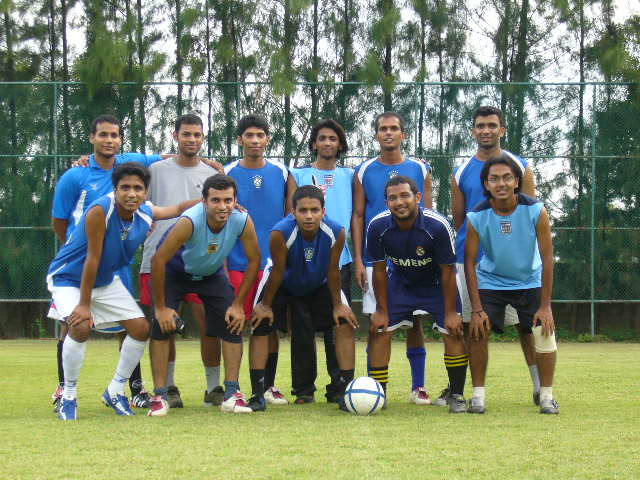
Team

Standing: Ambrose, Mani, Binil, Disney,Sanjay,Bipin
Siting:Winson, Ashwin, Lijo , Lijo, Sandeep

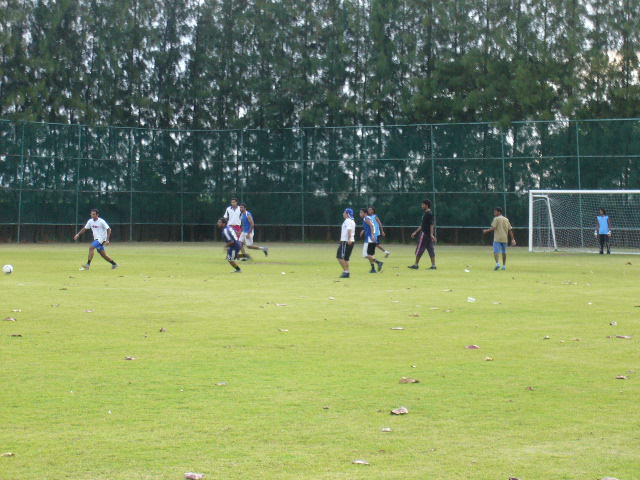
Game in Action

1st Half
2nd Half

Tuesday, August 22, 2006

Heightz of Football craze!!!

Click to enlarge

Friday, August 18, 2006

Team for Onam Special Match

Binil * Sanjay * Winson
* Ashwin* Lijo * Ambrose
* Bipin * Sandeep * Lijo (Dude) *Sreekanth
Disney

Reserves : * Roshan * Ajith *
Refree: Aju George
Score: AU FC (9) - Kerala Samajam ( 7)

Monday, August 14, 2006

Team de AU

(L2R) Binil, Sam, Jijo, Sanjay, Lijo
(L2R) Winson, Disney, Ashwin, Sandy, Lijo, Jovy

Offside Rule


The application of the offside rule is best considered in three steps; Offside position, Offside offence and Offside sanction.

Offside position
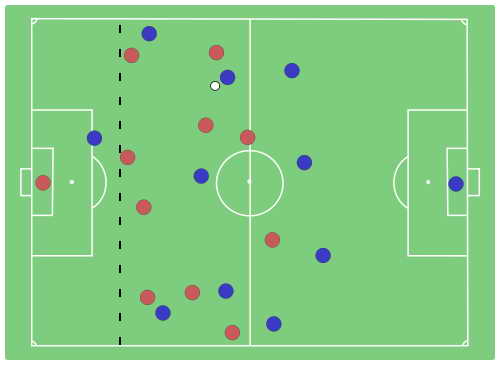
The blue forward on the left of the diagram is in an offside position as he is both in front of the second to last defender (marked by the dotted line) and the ball. Note that this does not necessarily mean he is committing an offside offence.
A player is in an offside position if "he is nearer to his opponents' goal line than both the ball and the second to last opponent," unless he is in his own half of the field of play. A player level with the second to last opponent is not in an offside position. Note that the last two opposing players can be either the goalkeeper and an outfield player, or two outfield players. It is important to note that being in an offside position is not an offence in itself.

Offside offence
A player in an offside position is only committing an offside offence if, "at the moment the ball touches or is played by one of his team", the player is in an offside position and in the referee's opinion is involved in active play. A player is not committing an offside offence if the player receives the ball directly from a throw-in, goal kick or corner kick.
In order for an offside offence to occur the player must be in an offside position when the ball is touched or played by a team-mate; a player who runs from an onside position into an offside position after the ball was touched or played by a team-mate is not penalised. Similarly, a player who is in an offside position when the ball is touched or played by a team-mate may potentially commit an offside offence even if they run back in to an on-side position before receiving the ball.
Determining whether a player is in "active play" can be complex. FIFA issued new guidelines for interpreting the offside law in 2003 and these were incorporated in law 11 in July 2005. The new wording seeks to more precisely define the three cases as follows:
Interfering with play means playing or touching the ball passed or touched by a teammate.
Interfering with an opponent means preventing an opponent from playing or being able to play the ball by clearly obstructing the opponent's line of vision or movements or making a gesture or movement which, in the opinion of the referee, deceives or distracts an opponent. Gaining an advantage by being in an offside position includes playing a ball that rebounds to him off a post or crossbar or playing a ball that rebounds to him off an opponent having been in an offside position.
In practice, a player in an offside position may be penalised before playing or touching the ball if, in the opinion of the referee, no other team-mate in an onside position has the opportunity to play the ball.

Offside sanction
The sanction for an offside offence is an
indirect free kick to the opposing team, at the spot where the offence occurred. Most referees use their discretion and let play go on if the "offended" team already has the advantage or ball, in order not to slow down play with redundant free kicks that achieve the same purpose of giving the advantage or ball back to the "offended" team.